
MENA
The premises and assumptions advanced by scholars of democratic backsliding do not easily translate well within the MENA region. The MENA series on several Arab states stretching from Morocco to Yemen share similar claims of authoritarian, rather than democratic resilience. The case for democratic backsliding across the MENA region displays different trend of a democratic rollback, specific to Tunisia primarily the country with the longest set of Arab Spring democratization reforms (2011-2021), and only secondarily to Egypt and Libya where democratization was short-lived (2011-2013). MENA’s democratization ‘stories’ by and large reflect continuous manipulation of mostly state-led reforms that do not endure the tests of regional war, sectarianism, securitization of politics, and tribal divides. In particular, the atrophy of democratization, especially post Arab Spring, may be broadly interpreted through two interconnected dynamics, one regional and the other international. At the regional level, counter-revolutions undermined the gains acquired by civil and political societies after the 2011 uprisings that resulted in ousters of fiercely authoritarian regimes (e.g. Tunisia followed by Egypt, Libya and Yemen). Incipient democratization processes were dismantled though a brand of solidarity of autocratic forces in the region (with some participation from Arab rich oil-states). Internationally, both the EU and the US more or less abandoned their early democracy promotion agendas in the MENA region. The focus turned to sustaining regimes that could police terrorism and migration. This enabled authoritarian regimes to take advantage of Western disinterest in democratization to neutralize outside pressure, relying increasingly on executive powers to regress on reforms and use courts and draconian measures to shrink civic spaces and undermine all opposition and free political competition.
-
Egypt’s Divided Political Society and ‘Loyal Opposition’
This report analyses Egypt’s opposition, which has failed to rise up to the challenge of being a democratic force in the country’s politics. Horizontal solidarity and mounting challenges to incumbent governments are currently missing components among opposition actors. The status quo reveals a situation in which the multitude of political parties, officially numbering 87, on…
·

-
Iraq’s Precarious Political System: Consociationalism and Permanent Crisis
This report examines Iraq’s post-Saddam Hussein political order, a consociational arrangement known as muhasasah, or the apportionment of power resources among the country’s ethno-sectarian groups. Designed to accommodate societal diversity, muhasasah has become a fundamental flaw in Iraq’s political system. Instead of fostering national consensus, it has hardened ethno-sectarian identity politics, and has become synonymous…
·

-
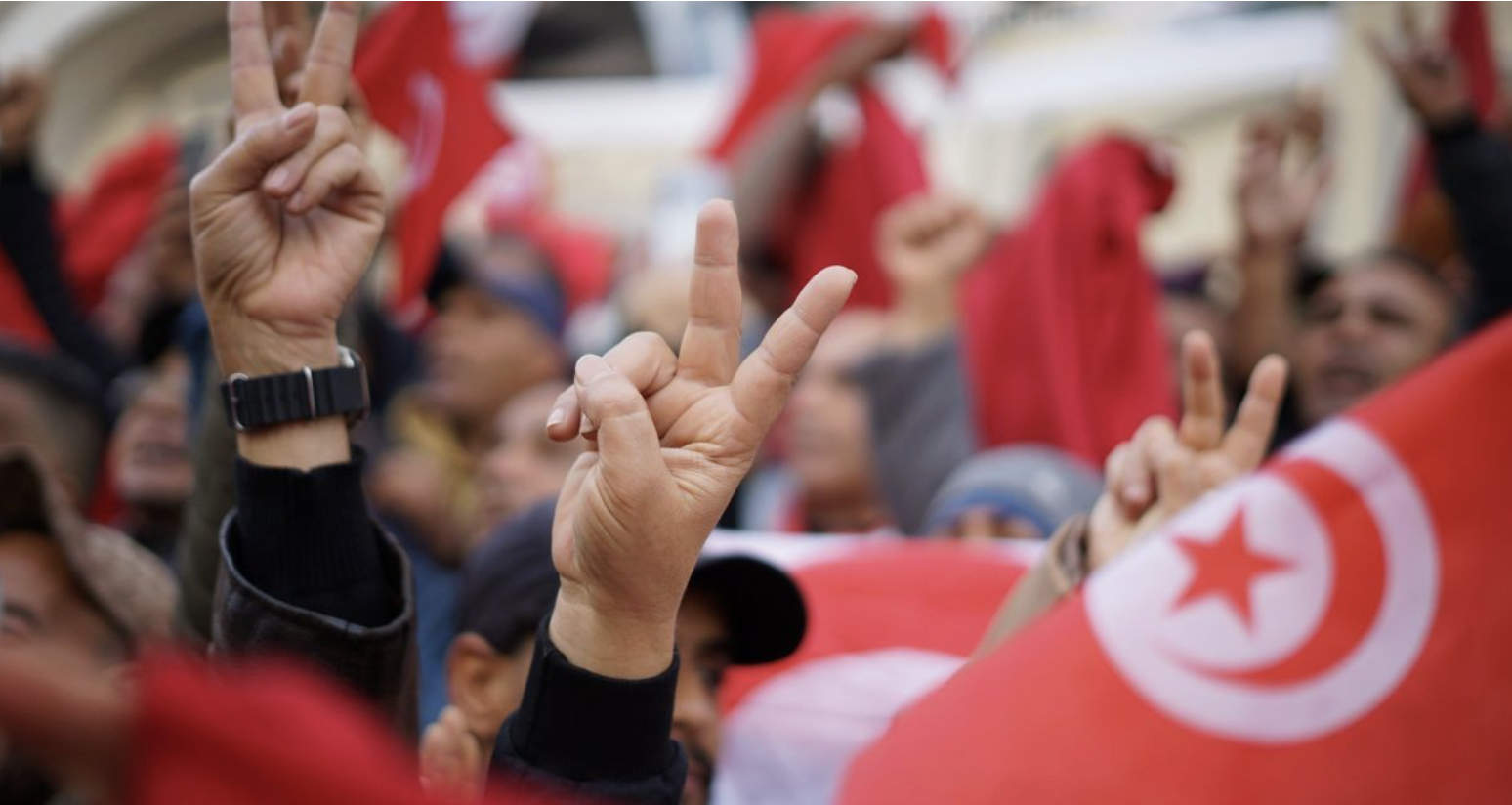
On the Erosion of Tunisia’s Once-Promising Democratisation Experiment
This report aims to examine the process of Tunisia’s autocratisation, which continues to reverse the gains from the 2011 Arab Spring. With receding civic freedoms and the rising tide of populist politics, there does not seem to be much room for democratic resilience and defence against democratic backsliding in Tunisia. The report provides a background…
·
-
The Arab Spring Rollback and Varieties of Arab ‘Autocratization’
The Arab region, or MENA (Middle East and North Africa), has had a chequered history with democratization. Today, the prevailing trend is less one of democratic transition than of autocratization and democratic de-consolidation. Against this backdrop, the Toda Peace Institute presents An Eye on Arab De-democratization, a series examining patterns of democratic erosion across nine…
·