
Latest Books

Between Hope and Despair
100 Ethical Reflections on Contemporary India
India’s collective ethical identity is under duress. We don’t seem to currently agree onwhat our collective good is. Some groups believe that India is finally rediscovering itsHindu identity and becoming a great nation-state. For others, this change has broughtus on the verge of losing our civilisational character of being inclusive but not any lessHindu.Is it possible to bring these groups with divergent views to discuss each other’s point ofview? And do so reasonably, with an open mind? Rajeev Bhargava thinks it is.

Arduous Paths
On the Theory and Practice of Democratic Transition
Azmi Bishara’s Arduous Paths builds on his sizeable body of work on democracy through the lenses of civil society, religion and secularism, populism and sectarianism.
Arab transition scholarship is regarded in some quarters as confined to theory, reliant on imported data, and uncritical of concepts of democratisation. However, while Bishara situates his research within a critical theoretical framework, he directly engages with the concerns of contemporary Arab societies—given the relevance of the transition to democracy for those living under authoritarianism—by testing theory and lessons learned from democratic transitions elsewhere against Arab cases, thus contributing to the scholarly debate. This English translation offers a detailed analysis of modernisation and transition theory, interwoven with empirical evidence from the modern Middle East and the author’s critical commentary and evaluation.
Bishara evaluates the outcomes of transition experiences in Arab countries that have seen revolutions and popular uprisings, illustrating how—despite the centrality of the demand for democracy across the region during the 2010/2011 protests, and again in 2019—transition failed in some cases, and never took place in others. He concludes by offering the reader a distinctly Arab contribution to the field of democratic transition studies.

The Death of Democracy
Hitler’s Rise to Power
A riveting account of how the Nazi Party came to power and how the failures of the Weimar Republic and the shortsightedness of German politicians allowed it to happen. Why did democracy fall apart so quickly and completely in Germany in the 1930s? How did a democratic government allow Adolf Hitler to seize power? In The Death of Democracy, Benjamin Carter Hett answers these questions, and the story he tells has disturbing resonances for our own time.

Assembling India’s Constitution
A New Democratic History
In this paradigm-shifting history, two leading historians of India re-examine the making of the Indian constitution from the perspective of the country’s people. In a departure from dominant approaches that foreground the framing of the text within the Constituent Assembly, Ornit Shani and Rohit De instead demonstrate how it was shaped by diverse publics across India and beyond. They reveal multiple, parallel constitution-making processes underway across the subcontinent, highlighting how individuals and groups transformed constitutionalism into a medium of struggle and a tool for transformation. De and Shani argue that the deep sense of ownership the public assumed over the constitution became pivotal to the formation, legitimacy and endurance of India’s democracy against arduous challenges and many odds. In highlighting the Indian case as a model for thinking through constitution making in plural societies, this is a vital contribution to constitutional and democratic history.

Defending Democracy in an Age of Sharp Power
The world’s dictators are no longer content with shoring up control over their own populations—they are now exploiting the openness of the free world to spread disinformation, sow discord, and suppress dissent. In Defending Democracy in an Age of Sharp Power, editors William J. Dobson, Tarek Masoud, and Christopher Walker bring together leading analysts to explain how the world’s authoritarians are attempting to erode the pillars of democratic societies—and what we can do about it

The Sciences of the Democracies
The field of democracy studies is more constricted than it needs to be, as researchers, for all their insights, continue to study only fragments of democracy in isolation from each other. Seeking change, The Sciences of the Democracies proposes a groundbreaking means for holistic study, drawing on five sources of knowledge that will provide better understanding of democracy, or rather, of ‘the democracies’. These are: individual people, groups of people, non-textual media, texts, and non-humans.
This book details how the inclusion of these five sources across temporal, spatial, cultural, linguistic, and species contexts leads to the discovery of democratic practices and institutions hitherto unknown or unfamiliar to the conventional ‘Western’ perception. It promises to generate a new class of democratic theorist – the ‘Fourth Theorist’, who theorizes from thousands of multimedial democracy concepts – and it has the potential for generating better-founded, less arbitrary, more inclusive democratic theories. In doing so, the book considers the philosophical, institutional, educational, and methodological difficulties of the scientific understandings and undertakings it proposes. The book is a choral work of many collaborating authors. Their ambition is to offer a touchstone text for government and public officials, citizens, residents and visitors, researchers, practitioners, and philanthropists (big and small) participating in what is a vibrant global discussion on how to study and practice democracy equitably.

Backsliding
Democratic Regress in the Contemporary World
Assaults on democracy are increasingly coming from the actions of duly elected governments, rather than coups. Backsliding examines the processes through which elected rulers weaken checks on executive power, curtail political and civil liberties, and undermine the integrity of the electoral system. Drawing on detailed case studies, including the United States and countries in Latin America, Eastern Europe, and Africa, the book focuses on three, inter-related causal mechanisms: the pernicious effects of polarisation; realignments of party systems that enable elected autocrats to gain legislative power; and the incremental nature of derogations, which divides oppositions and keeps them off balance.

The Light That Failed
Why the West is Losing the Fight for Democracy
Why did the West, after winning the Cold War, lose its political balance? In the early 1990s, hopes for the eastward spread of liberal democracy were high. And yet the transformation of Eastern European countries gave rise to a bitter repudiation of liberalism itself, not only there but also back in the heartland of the West. In this brilliant work of political history, Ivan Krastev and Stephen Holmes argue that the supposed end of Communism turned out to be only the beginning of the age of the autocrat. Reckoning with the history of the last thirty years, they show that the most powerful force behind the wave of populist xenophobia that began in Eastern Europe stems from resentment at the post-1989 imperative to become Westernised.

Demagogues and Despots
Democracies on the Brink
We live in troubled times, marked by a sinister trend threatening democracy everywhere: the triumph of despotism not only in countries like Russia, Iran and Saudi Arabia, but also in states run by popularly elected demagogues—Trump, Erdoğan and Netanyahu. Keane explains that democracy is the collective insistence that unaccountable power is always dangerous—and that democratic institutions are our best weapon against demagogues and despots.
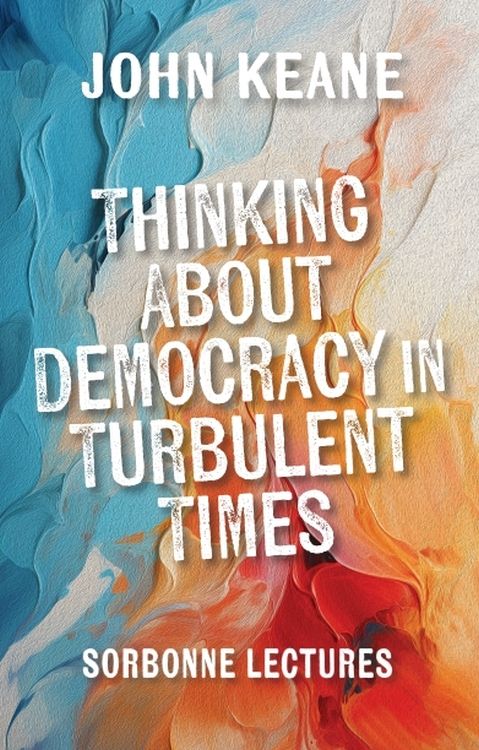
Thinking About Democracy in Turbulent Times
The Sorbonne Lectures
In a period of mounting global anxiety and widespread political unrest about democracy’s future, the moment has come for more thinking about thinking, and for considering the surprising connections between thinking and democracy.

Democracy and Inequality in India
Political Economy of a Troubled Giant
Contemporary India provides a giant and complex panorama that deserves to be understood. Through in-depth analysis of democracy, economic growth and distribution, caste, labour, gender, and foreign policy, Atul Kohli and Kanta Murali provide a framework for understanding recent political and economic developments. They make three key arguments. Firstly, that India’s well-established democracy is currently under considerable strain. Secondly, that the roots of this decline can be attributed to the growing inequalities accompanying growth since the 1990s. Growing inequalities led to the decline of the Congress party and the rise of the BJP under Narendra Modi. In turn, the BJP and its Hindu-nationalist affiliates have used state power to undermine democracy and to target Indian Muslims. Finally, they highlight how various social groups reacted to macro-level changes, although the results of their activism have not always been substantial. Essential reading for anyone wishing to understand democracy in India today.
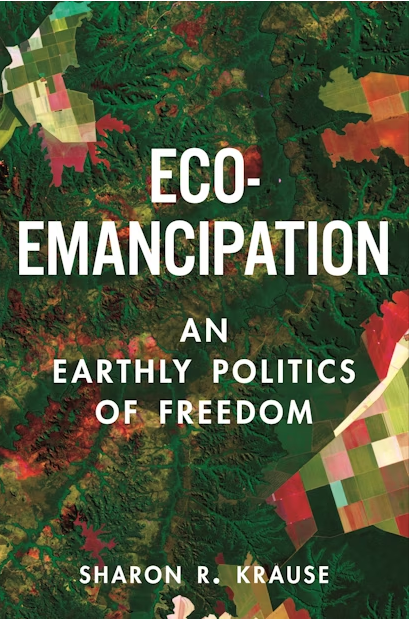
Eco-Emancipation
An Earthly Politics of Freedom
Human domination of nature shapes every aspect of our lives today, even as it remains virtually invisible to us. Because human beings are a part of nature, the human domination of nature circles back to confine and exploit people as well—and not only the poor and marginalized but also the privileged and affluent, even in the world’s most prosperous societies. Although modern democracy establishes constraints intended to protect people from domination as the arbitrary exercise of power, it offers few such protections for nonhuman parts of nature. The result is that, wherever we fall in human hierarchies, we inevitably find ourselves both complicit in and entrapped by a system that makes sustainable living all but impossible. It confines and exploits not only nature but people too, albeit in different ways. In Eco-Emancipation, Sharon Krause argues that we can find our way to a better, freer life by constraining the use of human power in relation to nature and promoting nature’s well-being alongside our own, thereby releasing the Earth from human domination and freeing us from a way of life that is both exploitative and exploited, complicit and entrapped. Eco-emancipation calls for new, more-than-human political communities that incorporate nonhuman parts of nature through institutions of representation and regimes of rights, combining these new institutional arrangements with political activism, a public ethos of respect for nature, and a culture of eco-responsibility.

Colonial Origins of Democracy and Dictatorship
Why are some countries more democratic than others? For most non-European countries, elections began under Western colonial rule. However, existing research largely overlooks these democratic origins. Analysing a global sample of colonies across four centuries, this book explains the emergence of colonial electoral institutions and their lasting impact. The degree of democracy in the metropole, the size of the white settler population, and pressure from non-Europeans all shaped the timing and form of colonial elections.

Resilience of Democracy
Responses to Illiberal and Authoritarian Challenges
Illiberalism and authoritarianism have become major threats to democracy across the world. In response to this development, research on the causes and processes of democratic declines has blossomed. Much less scholarly attention has been devoted to the issue of democratic resilience. Why are some democracies more resilient than others to the current trend of autocratization? What role do institutions, actors and structural factors play in this regard? What options do democratic actors have to address illiberal and authoritarian challenges? This book addresses all these questions.

Im Zwielicht
Zebrechlichkeit und Resilienz der Democratie im 21. Jahrhundert
Die Demokratie ist heute mit einer außergewöhnlichen Verdichtung an externen Krisen konfrontiert: Klimawandel, Migration, Pandemie, Krieg und entgrenzter Kapitalismus. Doch was meinen wir eigentlich, wenn wir von »der« Demokratie sprechen? Wie gehen die entwickelten Demokratien mit diesen Herausforderungen um? Begegnen sie dem Zeitdruck mit »Verschlankung« der demokratischen Verfahren? Antworten sie auf die rechtspopulistischen Bewegungen mit illiberalen Instrumenten wie Verboten, Überwachung und Ausschlüssen? Befinden sich die Demokratien im Niedergang? Die Pfade sind nicht vorgezeichnet, der Niedergang ist nicht besiegelt. Die Schwächen und Blessuren der liberalen Demokratien treten heute jedoch deutlicher hervor als noch zur Jahrtausendwende. Aber neben der neuen Zerbrechlichkeit der Demokratie stehen auch beachtliche Erfolge der Demokratisierung, etwa in Geschlechterfragen oder der Zivilgesellschaft. Bei allen Sorgen – so Wolfgang Merkel – sollte man die Resilienz der liberalen Demokratien nicht unterschätzen.
English Translation:
Democracy today is confronted with an extraordinary number of external crises: climate change, migration, pandemic, war, and unbounded capitalism. But what do we actually mean when we talk about ‘democracy’? How do developed democracies deal with these challenges? Are they responding to time pressure by ‘streamlining’ democratic procedures? Are they responding to right-wing populist movements with illiberal instruments such as bans, surveillance and exclusions? Are democracies in decline? The paths are not predetermined, the decline is not sealed. However, the weaknesses and flaws of liberal democracies are more evident today than they were at the turn of the millennium. But alongside the new fragility of democracy, there are also considerable successes in democratisation, for example in gender issues or civil society. Despite all the concerns – according to Wolfgang Merkel – the resilience of liberal democracies should not be underestimated.

The Great Experiment
Why Diverse Democracies Fall Apart and How They Can Endure
Never in history has a democracy succeeded in being both diverse and equal, treating different ethnic or religious groups fairly. And yet achieving that goal is now central to the democratic project. It is, Yascha Mounk argues, the greatest experiment of our time. Drawing on history, social psychology, and comparative politics, Mounk explains why we need to create a world in which our ascriptive identities come to matter less–not because we ignore global injustices, but because we have succeeded in addressing them.

On Democracies and Death Cults
Israel, Hamas and the Future of the West
Drawing from intensive on-the-ground reporting in Israel, Gaza and Lebanon, Murray presents a compelling case that places the latest violence in its historical context. He takes readers on a harrowing journey through the aftermath of the 7 October 2023 massacre, piecing together exclusive accounts from victims, survivors and even the terrorists responsible for the atrocities. On Democracies and Death Cults argues that Israel’s commitment to fundamental Western values – capitalism, individual rights, democracy and reason – has made it a beacon of progress in a region dominated by authoritarianism and extremism. Murray contrasts Israel’s principles with the ideology of Hamas, which openly proclaims its love of death over life. If left unchecked, Murray argues, this misplaced Western sympathy could embolden forces that seek to undermine democratic values and perpetuate a culture of violence. Clear-eyed and deeply reasoned, On Democracies and Death Cults is a gripping and essential read for all who seek to understand the complexities of the Israeli–Palestinian conflict and its implications for the future of democracy – and for the world itself.

Les Institutions invisibles
Autorité, confiance, légitimité. Le sentiment spontané de leur centralité dans le fonctionnement des sociétés voisine avec le flou de leur caractérisation. En retraçant l’histoire longue de leur appréhension, ce livre propose de les comprendre comme des institutions invisibles. Institutions, car elles ont une fonction de production du commun et d’inscription dans la durée des rapports économiques, sociaux et politiques. Mais invisibles, car elles ne sont pas définies par des règles et des statut ni dotées d’une capacité de contrainte. Elles sont en effet constituées par la nature et la qualité des relations entre individus, ou entre individus et organisations. Autorité, confiance et légitimité s’entrelacent sur ce mode pour fair système. Cette conceptualisation permet d’élargir le cadre d’analyse des sociétés contemporaines tout en l’inscrivant dans une histoire comparative renouvelée. Elle ouvre gleichzeitanément des perspectives pour agir en vue de surmonter la perplexité des intelligences et l’assèchement des imaginations qui nourrissent aujourd’hui le fatalisme résigné à l’ombre duquel prospèrent les mirages populistes.
English Translation:
Authority, trust, legitimacy. The spontaneous feeling that they are central to the way societies function is at odds with the vagueness of their characterisation. By tracing the long history of their understanding, this book proposes to understand them as invisible institutions. Institutions, because they have a function in the production of the common good and the long-term registration of economic, social and political relationships. But they are invisible because they are not defined by rules and statutes, nor are they endowed with a capacity for constraint. They are in fact constituted by the nature and quality of relationships between individuals, or between individuals and organisations. Authority, trust and legitimacy are intertwined in this way to make a system. This conceptualisation makes it possible to broaden the framework for analysing contemporary societies, while placing it within a renewed comparative history. At the same time, it opens up prospects for action to overcome the perplexity of intelligence and the drying up of imagination that today nourish the resigned fatalism in whose shadow populist mirages thrive.
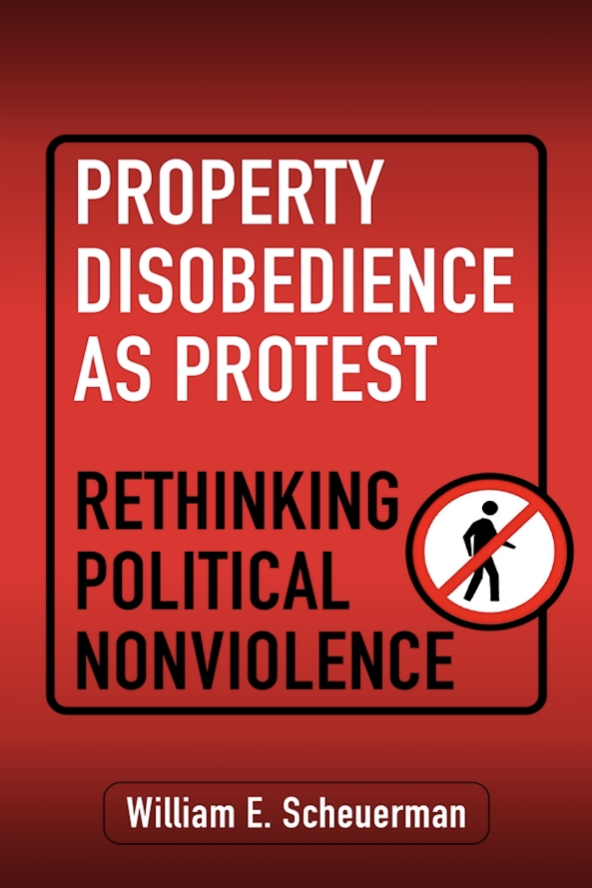
Property Disobedience as Protest
Rethinking Political Nonviolence
In 2020, Black Lives Matter activists toppled Confederate monuments and occasionally vandalized police vehicles and stations. Climate activists have damaged natural gas pipelines and famous artworks. In Hong Kong, pro-democracy students targeted businesses sympathetic to the mainland government. On January 6, 2021, far-right groups at the US Capitol mistreated public and private property as part of their efforts to disrupt finalizing election results. Property damage constitutes an increasingly commonplace feature of global political protest. How then to interpret and evaluate its proliferation? The media regularly describes such acts as “violent,” as do most scholars. However, William E. Scheuerman’s book pushes back against conflating politically motivated violations of property rights with violence. Political violence has no place in democratic politics. Yet indiscriminately grouping property damage together with acts destructive of and harmful to persons is conceptually confusing and politically misleading. After all, Americans celebrate the Boston Tea Party. So why do most of us now categorically condemn many seemingly parallel acts?
Scheuerman tackles challenging and politically timely questions. When, if ever, are politically motivated property harms justifiable? What standards should we expect of those pursuing them to meet, under democratic conditions? How are those standards undermined by the rise of authoritarian populism around the world? Focusing on identifiably nonviolent varieties of what Scheuerman calls property disobedience, his book explores a variety of real-life examples, both past and present, to understand how and why such acts may be politically justifiable—or should instead be viewed as beyond the pale.

The Incarcerations
Bk16 and the Search for Democracy in India
The Incarcerations tells the remarkable and chilling story of the Bhima Koregaon case, in which 16 human rights defenders (the BK-16) – professors, lawyers, journalists, poets – have been imprisoned, without credible evidence and without trial, as Maoist terrorists. Expertly leading us through the case, Shah exposes some of the world’s most shocking revelations of cyber warfare research, which show not only hacking of emails and mobile phones of the BK-16, but also implantation of the electronic evidence that was used to incarcerate them. Through the life histories of the BK-16, Shah dives deep into the issues they fought for and tells the story of India’s three main minorities — Adivasi, Dalits and Muslims — and what the search for democracy entails for them.

Grieving Democracy
Navigating the Loss of Affect
The book proposes that loss of affect for liberal democracy is a key problem today, in need of closer analysis. Manifested in an unprecedent suspicion of democratic governments, a readiness to elect authoritarian rulers, and a rise in reactionary politics, loss of affect pertains to the way that citizens experience democracy – their growing disinvestment from the democratic form of rule. It raises worrying questions, about the survival of democratic values into the twenty-first century, that democratic theorists often tend to either ignore or exaggerate. To navigate these questions, the book argues that grief can be a useful political resource. Understood as a response to loss, grief engages the imagination, opening the way to another, perhaps more caring, experience of democracy. To illuminate the nature of this experience, the book draws on feminist scholarship and work on contemporary culture, where grief and affect intersect.

Protecting Democracy in Europe
Pluralism, Autocracy and the Future of the EU
The future of Europe as a community of democratic states is deeply uncertain. The European Union, founded to promote ‘ever closer’ integration, aims nominally for peaceful, prosperous cooperation. But this ideal has been battered by a series of bruising crises, and now by war.
Protecting Democracy in Europe examines how, in this brave new world, the EU can and must safeguard democratic governance within its member states. Reviewing the Union’s past responses, Tom Theuns demonstrates that its existing laws and policies are normatively and expressively incoherent. Its failure to defend democratic values is unsurprising: the EU’s existing toolbox is based on an impoverished conception of democracy, and runs counter to its fundamental principles. Close attention to speeches by European Commissioners shows that they see democracy in a technical and legalistic way. This perspective–‘democracy without politics’–is easy for would-be autocrats to exploit. To protect democracy in Europe, Theuns argues, the EU must urgently correct policies that make it complicit in democratic backsliding. It must contain autocratic influences (within the strict limits of its political authority). And it must cultivate pluralist democracy within its constituent countries. But where this fails, he concludes, autocratic members should be expelled.

Corporatocracy
How to Protect Democracy from Dark Money and Corrupt Politicians
Donald Trump’s false claims of election fraud and the violence of the Capitol riot have made it unavoidably clear that the future of American democracy is in peril. Unseen political actors and untraceable dark money influence our elections, while anti-democratic rhetoric threatens a tilt towards authoritarianism.
In Corporatocracy, Ciara Torres-Spelliscy reveals the role corporations play in this dire state of political affairs, and explains why and how they should be held accountable by the courts, their shareholders, and citizens themselves. Drawing on key Supreme Court cases, Torres-Spelliscy explores how corporations have, more often than not, been on the wrong side of history by working to undermine democratic norms, practices, and laws. From bankrolling regressive politicians to funding ghost candidates with dark money, she shows us how corporations subvert the will of the American people, and how courts struggle to hold them and corrupt politicians accountable.

Hopeful Pessimism
The climate debate is rife with calls for optimism. While temperatures rise and disasters intensify, we are asked to maintain optimism and hope, as if the real threat is pessimism and despair. In this erudite and engaging book, Mara van der Lugt argues that this is a mistake: crude optimism can no longer be a virtue in a breaking world, and may well prove to be our besetting vice. In an age of climate change and ecological devastation, the virtue we need is hopeful pessimism.
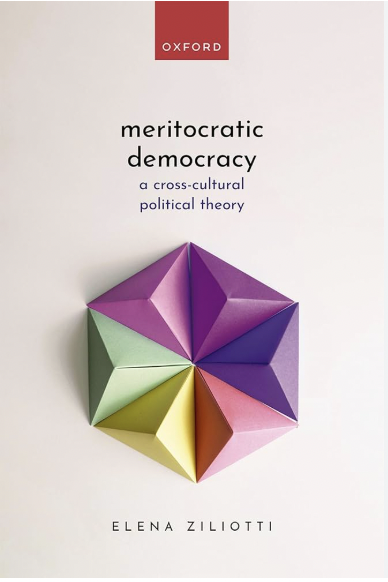
Meritocratic Democracy: A Cross-Cultural Political Theory
Meritocratic Democracy puts into dialogue contemporary works in Western democratic theory and Confucian political theory to examine the effectiveness of democracy as a decision-making system, the role of political leaders and political parties in real-world democracies. The result is a unique cross-cultural theory of democracy, meritocratic democracy, which combines democratic principles with a system of ‘partisan juries’ at the party level to enhance the quality of political leaders in democracy. Ultimately, this book shows that cross-cultural dialogue is imperative to generate innovative solutions to pressing political issues and foster reciprocal corrections.