
Resilience Research
An enormous number of books and articles have been written about democratic backsliding over the past 15 years. There is much less written about the resilience of democracy. We emphasise the importance of examining the sources of resilience in light of the current strains on democratic systems. At a time of global crisis, the rise of an undemocratic right, and a general decline of public confidence in liberal democracy, it is also urgent to analyse the strategies and actions that can make democracies more resilient. These are some of the reasons why TODA set up this research subgroup in the spring of 2025. The research into democratic resilience will focus on different regions of the world. Particularly on: North America, Latin America, India, Europe, and South East Asia.
The Impact of Trump 2.0 on Global Democracy
We begin our series on “Democratic Resilience” with analyses of the current state of US democracy. Trump’s policies are currently leading to a hollowing out of the country’s democratic institutions and democratic culture. The questions arise: how resilient are those democratic institutions, how stable is the country’s political culture, how are the economic and cultural elites of society reacting, and last but not least, what role does the demos, the people, play? Will US democracy survive as a constitutional and liberal system? What impact will internal developments in the world’s most powerful country have on the rest of the world? These and other questions will be published and discussed here over the coming months.
-
Party Like Mamdani
This report discusses the important lessons that the New York mayor-elect’s campaign masterclass has for India’s flailing democracy, particularly its ineffectual opposition parties that have failed to mount any meaningful pushback against Modi’s monopoly over power in more than a decade. Indian-born Zohran Mamdani’s victory speech laced with quotes of India’s first prime minister Jawaharlal…
·

-
Is Trump Adding to the Backsliding of the ‘World’s Biggest Democracy’?
This report examines the consequences for India of a second Trump presidential term. With his steep tariffs and cheap insults, Trump has eroded a decades-old Indian public consensus of a pro-America policy and revived old animosities towards the US. If an estranged India’s strategic engagement with America and the democratic world loosens, it can only…
·

-
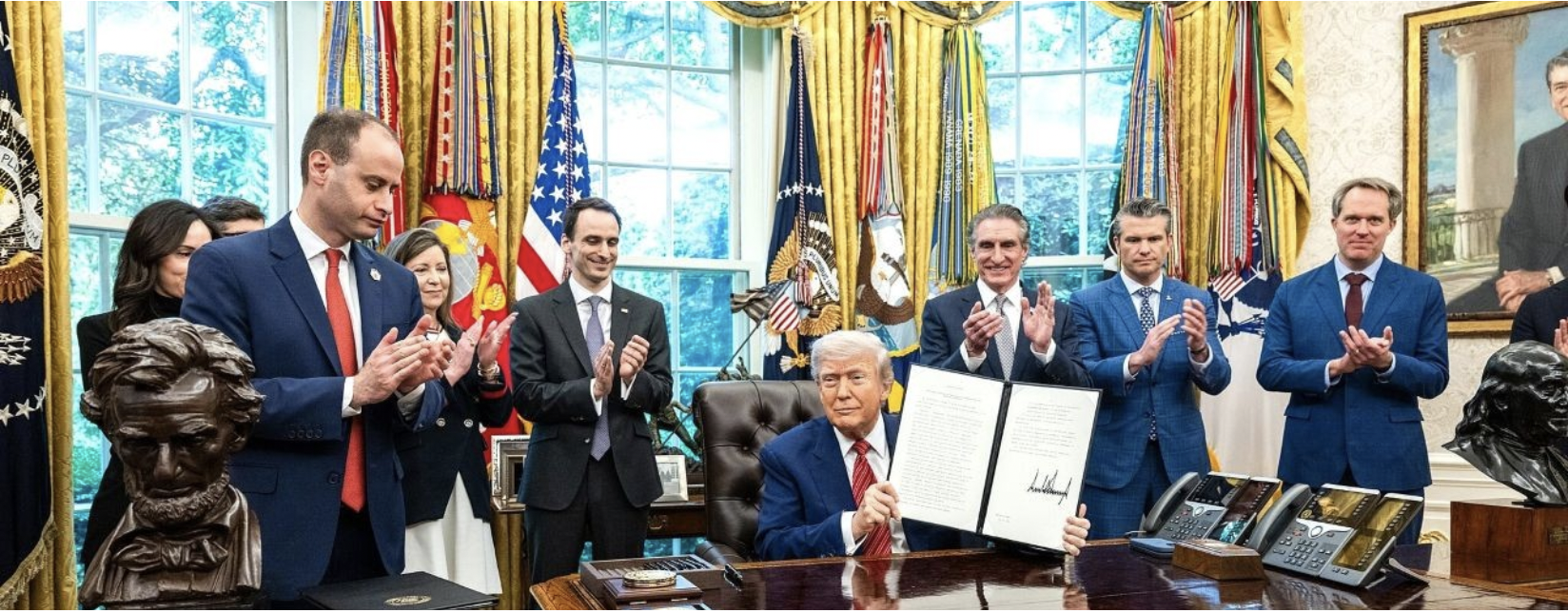
The Sultanization of US Politics
This report examines the terminology applied to the second presidency of Donald Trump. It has been called ‘fascist’, a ‘descent into fascism’ or a ‘revolutionary government in the form of an imperial court’. The US itself has been described as a ‘flawed democracy’. What are the arguments for describing Trump’s USA as a plutocracy or…
·
-
The Return of President Trump and Its Implications for South America
This report outlines the significant threat to democratic governance in Latin America posed by Trump’s renewed presidency. His attacks on the rule of law and alignment with authoritarian leaders have emboldened regional allies to weaken oversight institutions, concentrate power, and target vulnerable groups. As US soft power declines and China offers economic engagement without democratic…
·
