
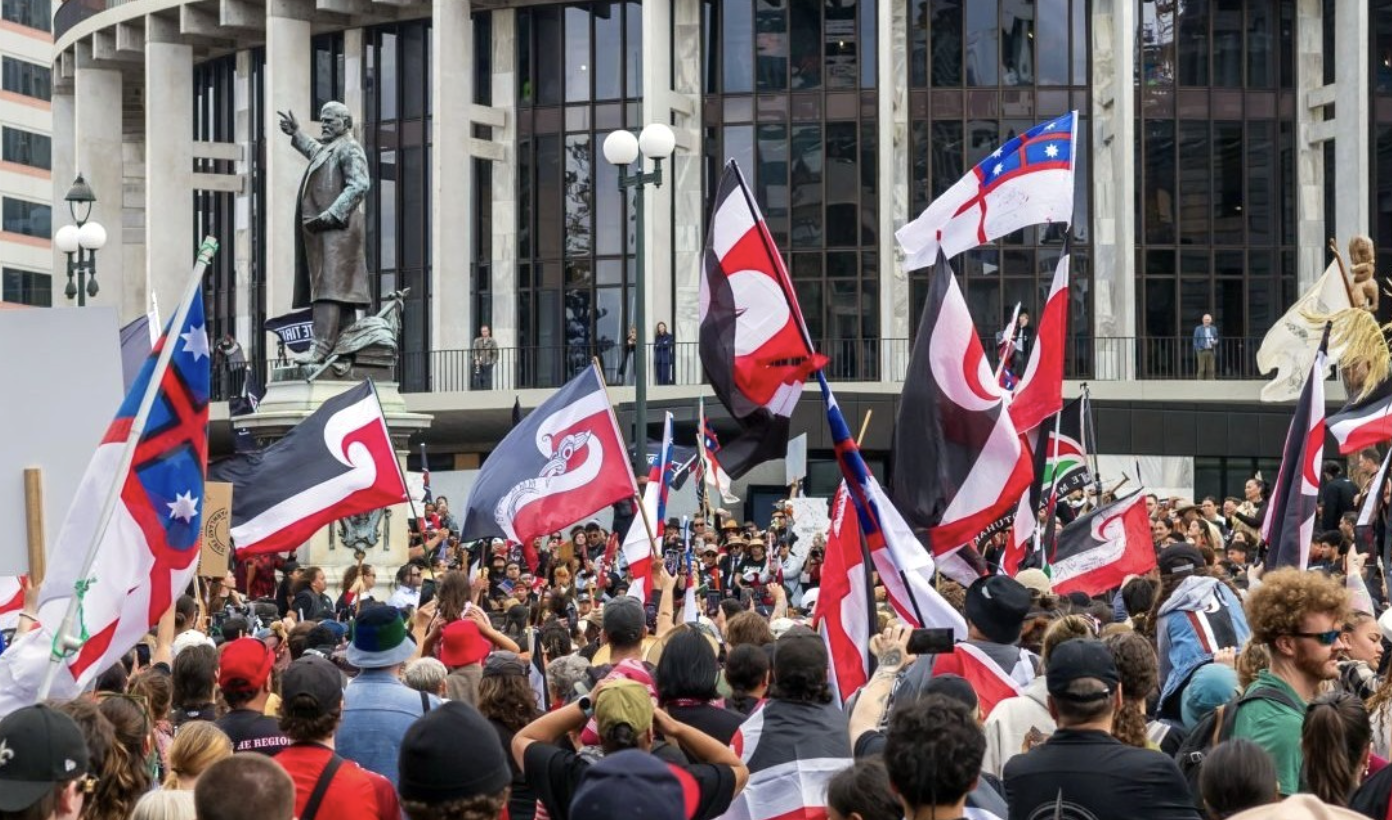
This report argues that New Zealand’s reputation as one of the world’s most stable social democracies increasingly obscures a quieter democratic erosion, evident across four domains: collapsing institutional trust, the structural collapse of the fourth estate, growing executive reliance on parliamentary urgency and fast-tracked legislation, and deepening constitutional tension over Māori rights. Yet erosion is only half the picture. The 2024 Hīkoi mō te Tiriti, record labour action, an independent judiciary, and a growing non-profit media ecosystem show that democratic culture is also renewing itself from below, though unevenly. Resilience is strongest where organised civil society infrastructure already exists, and weakest in domains, such as media and parliamentary process, that lack it. New Zealand is not approaching an acute constitutional crisis, but occupies a more insidious position—one where warning signs are visible enough to be noticed, yet not urgent enough to compel sustained corrective action.
Access the full report here
This article was first published on the Toda Peace Institute site.
