
Reimagining Democracy
The working precept of this research stream is that a radical renewal of the democratic imagination is urgently needed to make sense of the current condition of democracy and to deal practically with the myriad global threats it is currently facing. For more than a few scholars, journalists, politicians and citizens, democracy is admittedly a boring, so-yesterday subject. For others, it is a confused and disappointing ideal that no longer makes sense, or has any existential purchase. Democracy is a nice-sounding word, they say, a phantom that is everywhere and nowhere. Democracy promises heaven but delivers hypocrisy and hell, or nothing at all. Our research offers a counterview to this despondency and cynicism. Its central concern is to breathe life back into the spirit of democracy, to push for its redefinition, to persuade scholars and publics alike that far too much current thinking and commentary about democracy is failing to come to grips with the predicaments, problems and puzzles of our age. In these embattled times, our view is that democratic politics and ways of living require not just more action, but more imaginative thought.
At the heart of our research stand tough questions: might we be living in times in which many real-world things are happening to democracy that are not just unexpected or strange but far weirder than we can presently think? But what does it mean to think imaginatively about democracy? Come to think about it, what exactly is thinking? And what about the relationship between democracy and imaginative thinking? Might there be surprisingly close links between the act of thinking imaginatively and the theory and practice of democracy? Can we think about democracy democratically (a question famously posed by the eminent French classics scholar Nicole Loraux)? And most immediately: why bother trying to reimagine democracy when, after all, there is climate change, AI, savage wars in Myanmar, Ukraine, Sudan and Palestine, worsening US–China rivalries, and many other pressing matters to worry about?
-
Commercialising Peace: A Strategic Risk
The Trump administration’s reported proposal for a new international ‘Board of Peace’ is presented, at least in concept, as a corrective to what its proponents describe as the failures of existing multilateral diplomacy. As outlined in investigative reporting, the initiative is framed as a vehicle for delivering peace agreements more decisively than the United Nations…
·

-
Crisis in Venezuela: Three Scenarios
The US armed forces’ capture of Venezuelan president Nicolás Maduro and his wife, Cilia Flores, is the latest chapter in a very long history of United States military interventions in Latin America and throughout the world. And, as in almost all of the previous cases, this one has opened the way to a prolonged and costly commitment,…
·

-
Reclaiming Attention: From Digital Conflict to Democratic Dialogue
This policy brief poses the question: which human capacities does digital polarisation erode, and why does their erosion matter for democratic life? It references a comprehensive governance architecture developed by Toda Peace Institute, Lisa Schirch’s ‘Blueprint for Prosocial Tech Design Governance and Social Media Impacts on Conflict and Democracy’, which addresses the dynamics of digital…
·
-
The Empire Has No Clothes: America’s Democratic Sermons and the Authoritarian Boomerang
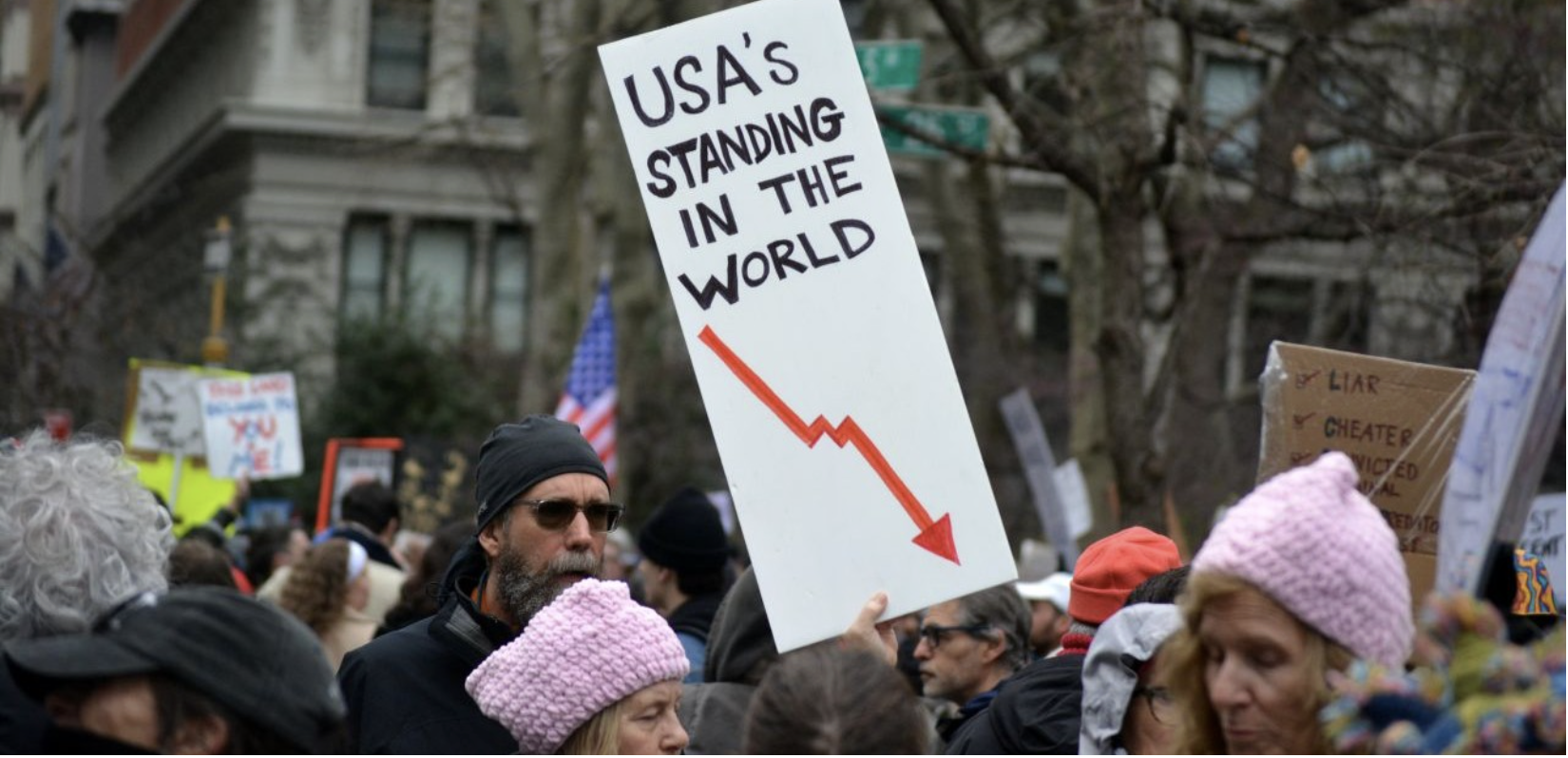
For decades, the United States stood on the world stage delivering sermons on democracy, capitalism, and human rights. It lectured nations into adopting its model under the banner of American exceptionalism. In 2025, a startling spectacle emerges: the nation that proclaimed itself democracy’s global arbiter now displays the very symptoms of authoritarianism it once denounced.…
·
-
Reluctant Truth-Tellers and Institutional Fragility
In democracies under strain, the most important truths often arrive too late, uttered hesitantly by those who should have spoken earlier. A striking case occurred on 5 July 2025, when Ty Cobb—former White House special counsel—accidentally revealed, in what he thought was a private Facebook comment, that Donald Trump was “worse than anyone in our…
·
-
Amerika: MAGA, China, Imperial Decline, Democracy
This report examines the current rivalries between the USA and China—two entangled but differently structured empires—which are triggering mental confusions, public anxieties and political misunderstandings and fears. Getting the measure of these world-shaping dynamics should be a priority for every thinking person, but the task is hampered by much bluff and bluster, propaganda and disinformation…
·

-
Time to Decouple and Build Solidarity with Like-Minded?
The White House meeting between Donald Trump, JD Vance and Volodymyr Zelenskyy was a diplomatic disaster, revealing the true character of the main actors. It became a high-level political brawl which many perceived as a White House ambush to provide a pretext for a major shift in U.S. political alignment…
·

-
After the Election: What Next in India?
India has voted in a new parliament. The strongman, Prime Minister Modi, suffered a setback, as the opposition did very well, beyond all expectations. With the support of smaller parties, Modi has received a third term in office. Will these results change India’s foreign, economic and socio-political policies? The ruling BJP not only missed its…
·

-
Why Parliaments?
This Policy Brief charts the history of the parliament of representatives, born more than eight centuries ago in northern Spain. This new instrument of government was among the most precious gifts to the world of modern…
·
