
Latest Articles
-
The Return of President Trump and Its Implications for South America
This report outlines the significant threat to democratic governance in Latin America posed by Trump’s renewed presidency. His attacks on the rule of law and alignment with authoritarian leaders have emboldened regional allies to weaken oversight institutions, concentrate power, and target vulnerable groups. As US soft power declines and China offers economic engagement without democratic…
·

-
From Backsliding to Recalibration? Trump 2.0 and Democracy in the Philippines
This report analyses the three-fold impact of the Trump 2.0 presidency on Philippine domestic politics, economic sectors, and foreign policy. It argues that Trump’s restoration could reinforce authoritarian tendencies in the Philippines, undermine its economic resilience amid shifting global trade regimes and increasing economic coercion from China, and constrain its capacity for strategic autonomy within…
·

-
The Gutting of Palestine
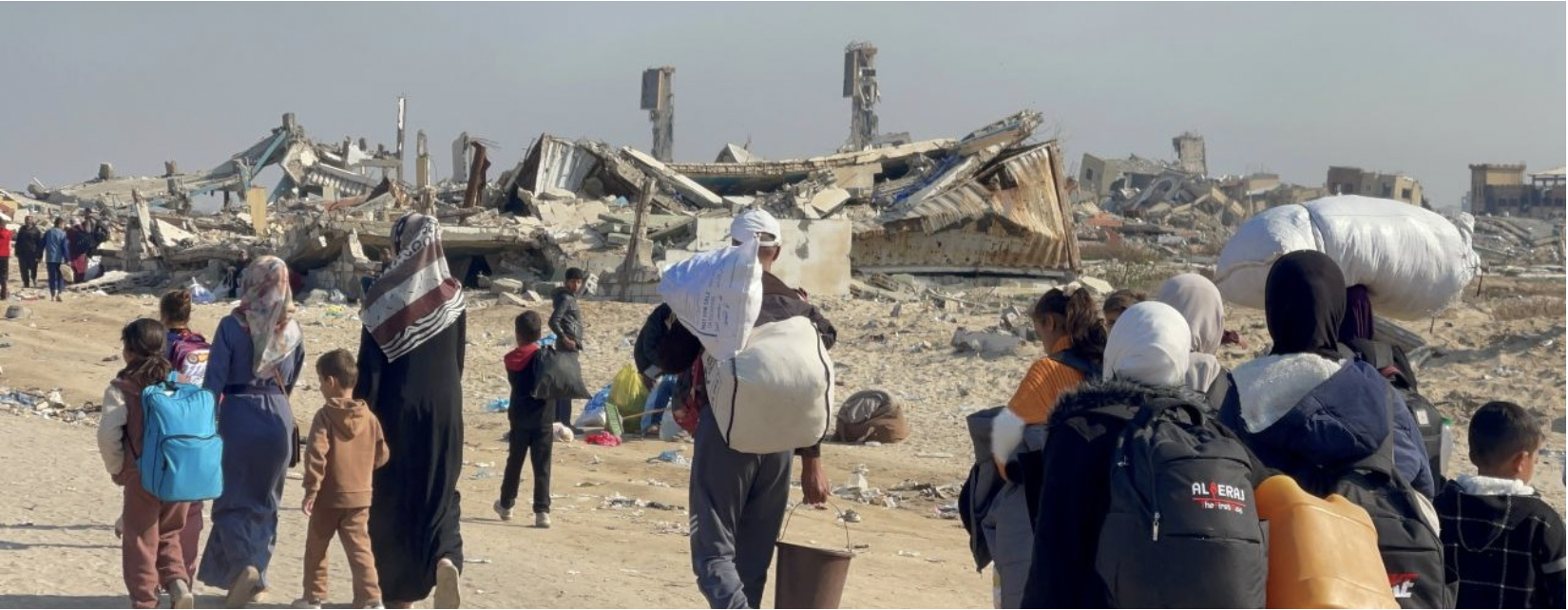
This report outlines the paradoxical situation that Gaza finds itself in, at once in the worst position since 1948 with no political clout yet with unparalleled global expressions of solidarity. With geopolitical deadlock and the widening of the conflict, prospects of an end to Israel’s destruction of Gaza are as distant as ever. But momentum…
·
-
Democracy in the 21st Century: Fragility and Resilience
This report summarises the key discussions and outcomes of the 2025 annual meeting of the Toda Peace Institute’s Global Challenges to Democracy Working Group, held in Geneva on 5–6 June in collaboration with the Centre on Conflict, Development and Peacebuilding (CCDP), Geneva Graduate Institute. The meeting centred on three main themes: the democratic threats posed…
·

-
America’s Retreat and the Future of Economic Multilateralism
This policy brief discusses the systematic retreat of the United States from multilateral institutions which threatens global economic reform, coinciding with China’s construction of alternative frameworks and rising great-power bilateralism. This leads to a growing incapacity for shared solutions on development finance, climate action, and tax coordination. The analysis identifies three strategic pathways—institutional evolution, adaptive…
·